Question 01
What problem does ECP help solve?
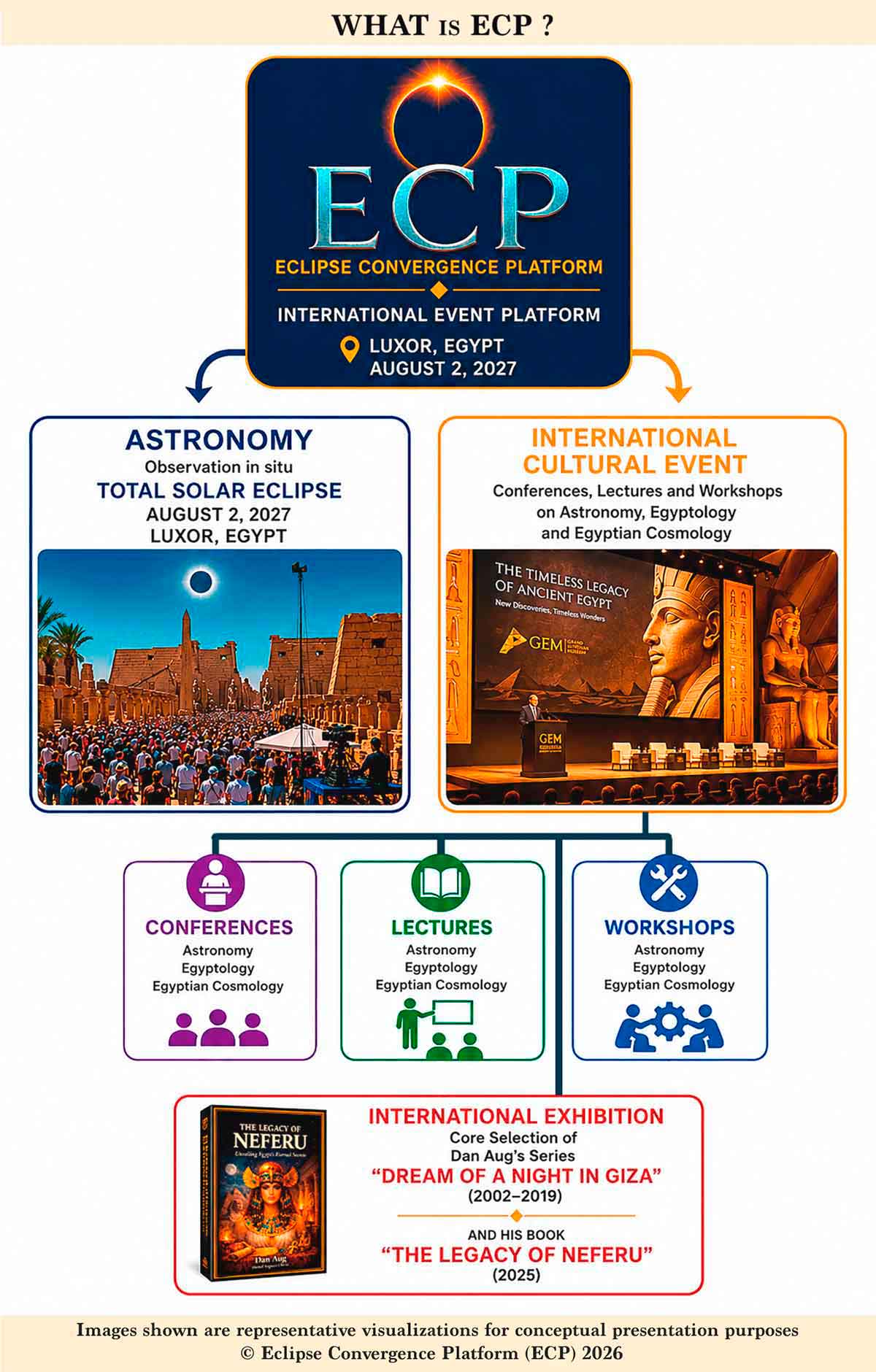
ECP helps transform a rare astronomical event into a meaningful platform. Instead of treating the eclipse only as a spectacle,
it creates a framework for public understanding, education, cultural dialogue and international participation.
Question 02
Why is the 2027 Luxor eclipse culturally significant?
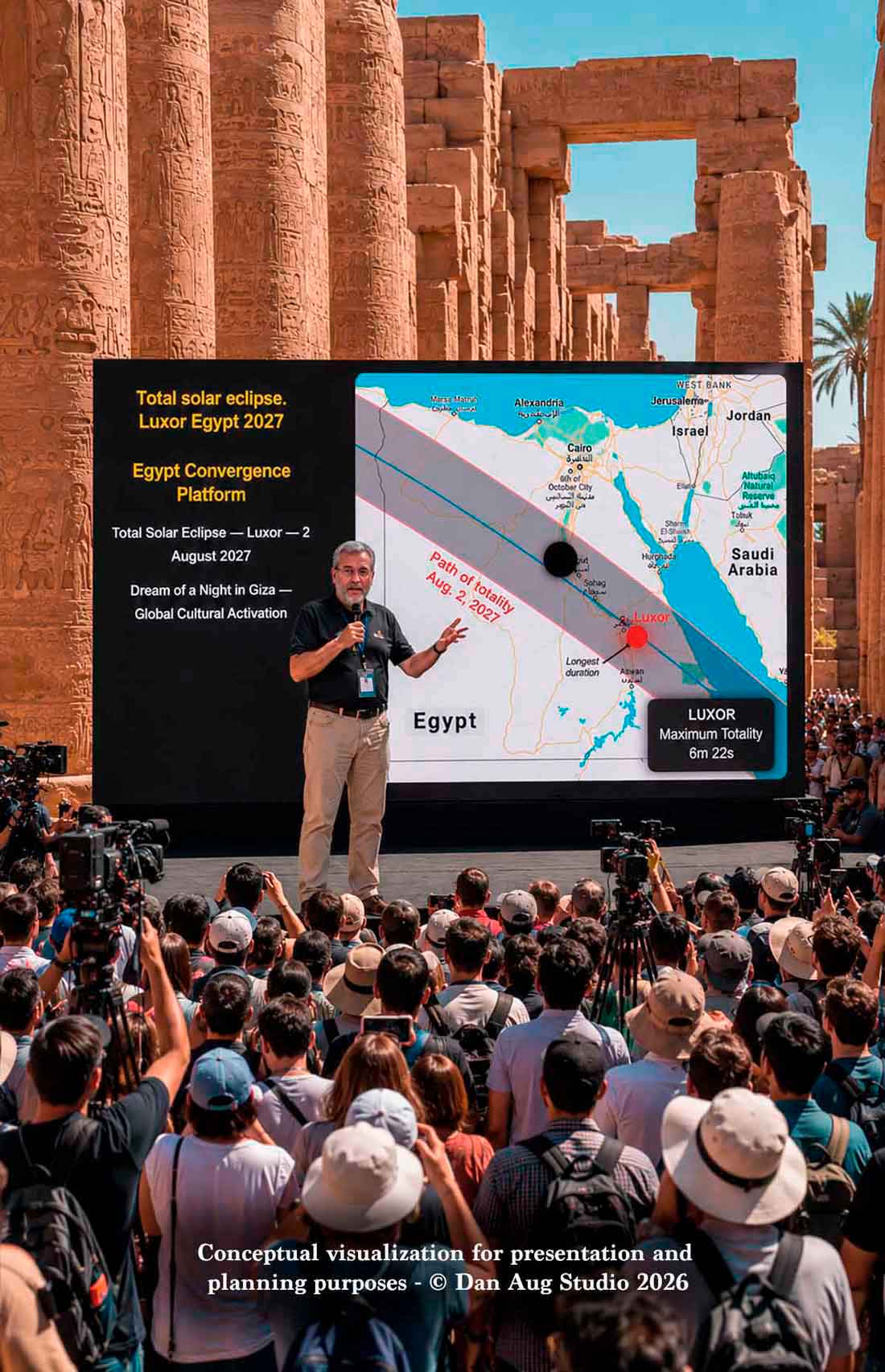
Luxor is one of the most symbolic cultural landscapes in the world. Experiencing a total solar eclipse in that setting creates
a unique bridge between contemporary astronomy and the ancient civilizations that observed the sky with extraordinary attention.
Question 03
How does ECP help people understand astronomy?
ECP can make astronomy accessible through lectures, observation activities, visual explanations, workshops and public presentations.
The eclipse becomes an entry point to understand the Sun, the Moon, celestial mechanics, time cycles and humanity's relationship with the sky.
Question 04
Why was astronomy important in Ancient Egypt?
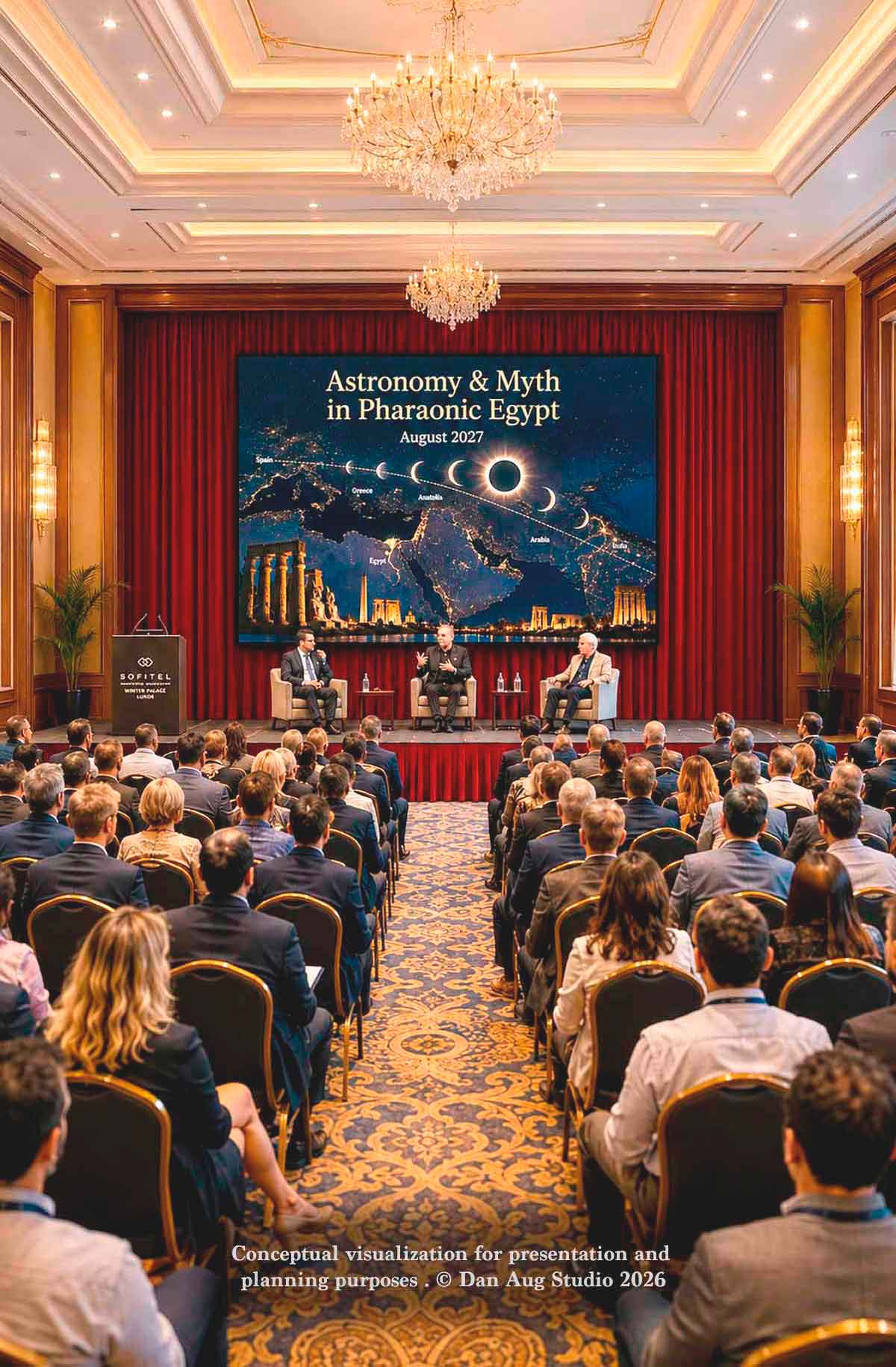
Astronomy was linked to calendars, seasonal cycles, temple orientation, sacred time, mythology and cosmological symbolism.
ECP can help visitors understand how sky observation influenced Egyptian thought, architecture and ritual life.
Question 05
How can ECP contribute to Egyptology?
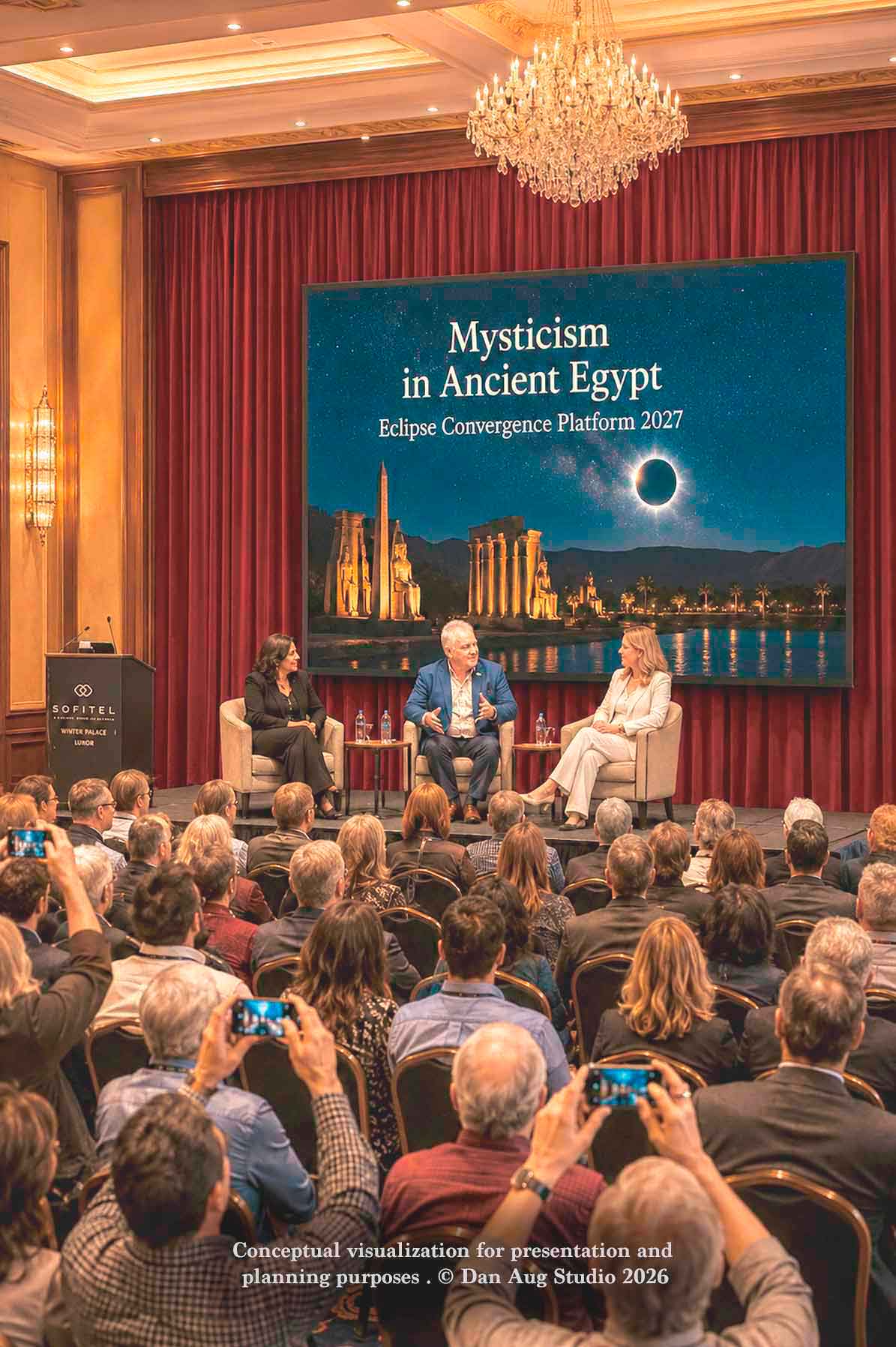
By attracting astronomy enthusiasts from around the world, ECP can introduce new audiences to Egyptology, Ancient Egyptian cosmology,
temple symbolism, sacred architecture and the intellectual depth of Egyptian civilization.
Question 06
Why is this important for cultural heritage?
Cultural heritage needs living audiences. ECP proposes to connect visitors emotionally and intellectually with Egyptian heritage,
encouraging deeper respect, education and long-term cultural interest beyond ordinary tourism.
Question 07
How does ECP support international cooperation?
A total solar eclipse naturally attracts people from many countries. ECP gives that global movement a cultural and educational structure,
bringing together institutions, travelers, scholars, artists, educators and astronomy communities.
Question 08
Can ECP include artistic activities?
Yes. ECP is open to artistic activities to be programmed, including exhibitions, visual arts presentations, cultural performances,
interdisciplinary installations, audiovisual works and creative projects inspired by astronomy, Ancient Egypt and the eclipse.
Question 09
Why could sponsors support ECP?
Sponsors are not only supporting an event. They are supporting science communication, cultural diplomacy, educational impact,
international visibility and a unique convergence between astronomy, heritage and contemporary culture.
Question 10
What makes ECP different from a normal eclipse trip?
A normal eclipse trip focuses on observation. ECP adds meaning, context and legacy: conferences, workshops, cultural programming,
Egyptology, artistic activities, educational content and international collaboration.
Question 11
How does ECP benefit visitors?
Visitors may experience the eclipse while also gaining cultural, scientific and historical context. The journey becomes more than travel:
it becomes a structured intellectual, emotional and cultural experience.
Question 12
What is the long-term value of ECP?
The long-term value is to create a model where major astronomical events become platforms for education, cultural exchange,
heritage appreciation, artistic creation and global cooperation.
Question 13
Why are total solar eclipses scientifically important?
Total solar eclipses offer unique opportunities to study the solar corona, atmospheric effects and the interaction between the Sun and Earth. They also inspire scientific curiosity among the general public.
Question 14
What is archaeoastronomy?
Archaeoastronomy is the study of how ancient civilizations observed the sky and incorporated astronomical knowledge into architecture, religion and cultural practices.
Question 15
Why is Luxor an exceptional location for the 2027 eclipse?
Luxor combines one of the longest total solar eclipses of the century with one of humanity's most important archaeological landscapes, creating a unique scientific and cultural setting.
Question 16
How can astronomy inspire younger generations?
Astronomy encourages curiosity, critical thinking and scientific literacy. Events such as eclipses often motivate young people to explore science, technology and the natural world.
Question 17
Can astronomy help preserve cultural heritage?
Yes. Understanding the astronomical dimensions of ancient monuments can enrich their interpretation and strengthen appreciation for cultural heritage across generations.
Question 18
Why do eclipses unite people worldwide?
Solar eclipses are global phenomena that transcend borders, languages and cultures, bringing together communities through a shared experience of wonder and discovery.
Question 19
How can art contribute to science communication?
Art translates complex scientific ideas into emotional and visual experiences, helping broader audiences engage with astronomy and cultural heritage.
Question 20
How may ECP contribute to intercultural dialogue?
By gathering participants from diverse countries and backgrounds, ECP can foster dialogue, mutual understanding and cultural exchange through science and heritage.
Question 21
Why does Ancient Egypt continue to fascinate humanity?
Ancient Egypt combines monumental architecture, sophisticated symbolism, astronomical traditions and enduring cultural achievements that continue to inspire people worldwide.
Question 22
Can major astronomical events leave lasting cultural legacies?
Yes. Historical astronomical events often inspire scientific advances, artistic expression and international cooperation that endure long after the event itself.
Question 23
How can ECP support educational initiatives?
ECP may provide lectures, workshops, educational materials and interdisciplinary activities that connect astronomy, history, art and cultural heritage.
Question 24
What vision guides the Eclipse Convergence Platform?
ECP envisions astronomy as a bridge between science, culture and humanity, transforming a rare celestial event into an opportunity for learning, dialogue and global collaboration.