General Questions
What is the Eclipse Convergence Platform?
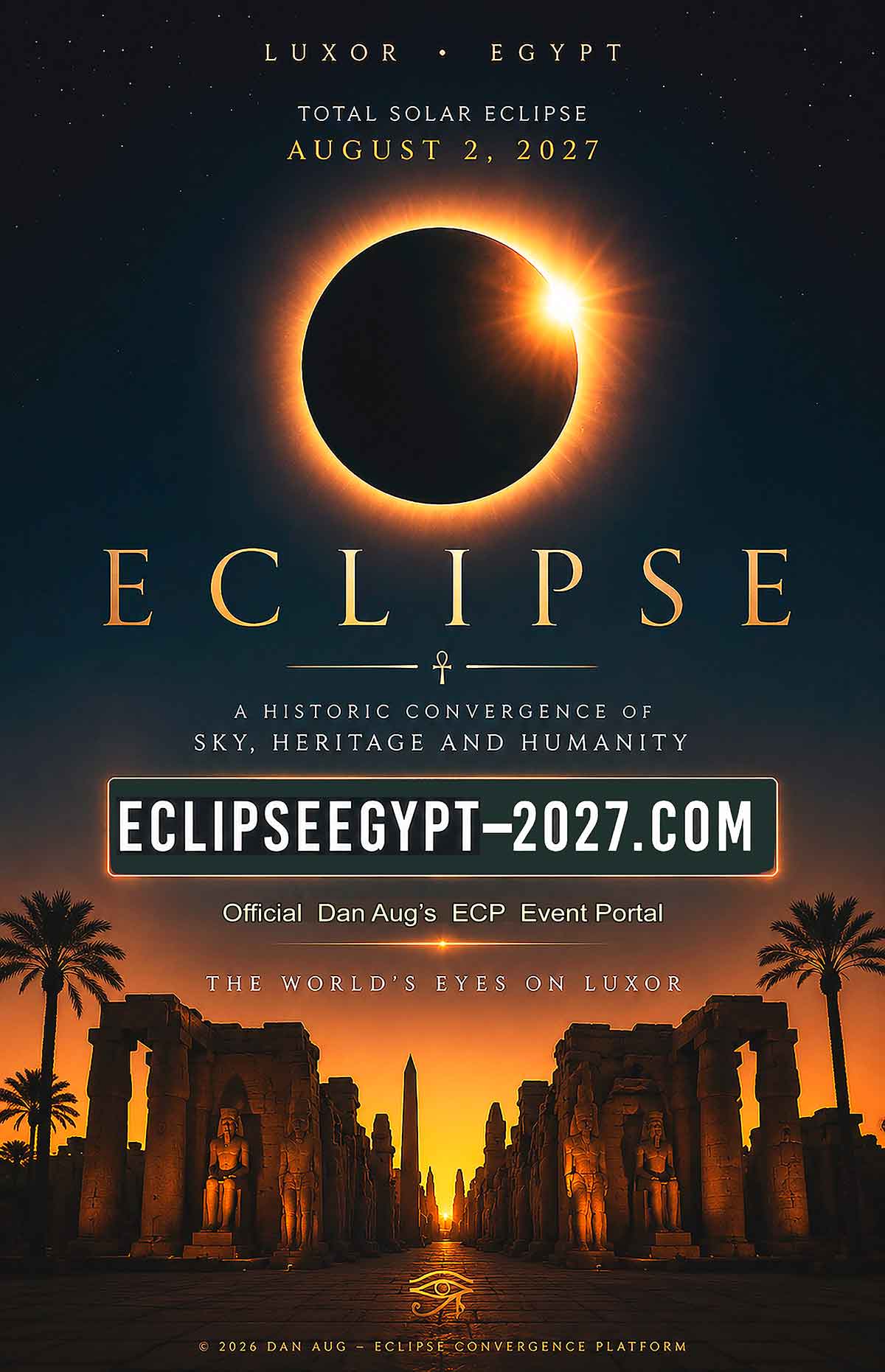
The Eclipse Convergence Platform, or ECP, is a proposed international initiative inspired by the Total Solar Eclipse of August 2, 2027 in Luxor, Egypt. It connects astronomy, cultural heritage, Egyptology, education, visual arts and international collaboration.
Who created the ECP project?
ECP was conceived by Dan Aug, a visual artist, amateur astronomer and lecturer on art, cosmology and Ancient Egypt.
Is ECP an official government event?
No. ECP is presented as Dan Aug's proposed international event platform. It should not be understood as an official Egyptian government portal.
Why was the name Eclipse Convergence Platform chosen?
The word “convergence” reflects the meeting point between sky, science, heritage, art, education and international culture around one extraordinary astronomical event.
What makes ECP different from a normal eclipse trip?
ECP is not only about observing the eclipse. It proposes a wider cultural and educational environment including lectures, workshops, exhibitions, Egyptology, visual arts and international dialogue.
The Eclipse
When will the 2027 total solar eclipse occur?
The total solar eclipse will occur on August 2, 2027. Luxor, Egypt is expected to be one of the most remarkable places from which to experience the event.
Why is the 2027 eclipse considered exceptional?
The 2027 eclipse is widely regarded as one of the major astronomical events of the century because of its long duration of totality and its path across historically significant regions.
How long will totality last in Luxor?
Luxor is expected to experience more than six minutes of totality, making it one of the most extraordinary eclipse observation locations in the world.
What is totality?
Totality is the brief period during a total solar eclipse when the Moon completely covers the Sun, revealing the solar corona and dramatically changing the atmosphere, light and emotional perception of the sky.
Will the eclipse be visible from all of Egypt?
The eclipse will be visible in different forms from different locations, but the most powerful experience requires being inside the path of totality. Luxor is one of the key locations associated with the event.
Do people need special glasses to watch the eclipse?
Yes. Safe solar viewing protection is essential during partial phases. The Sun should never be observed directly without certified eclipse glasses or proper solar filters.
Can the eclipse be photographed?
Yes, but photographing a solar eclipse requires proper filters, planning and equipment. Cameras, telescopes and phones should not be aimed at the uneclipsed Sun without safe solar filtration.
Luxor & Egypt
Why is Luxor such an important location?
Luxor is one of the most iconic cultural landscapes on Earth, home to temples, monuments and archaeological heritage connected with Ancient Egypt. Experiencing an eclipse there creates a symbolic meeting between astronomy and civilization.
Why does Ancient Egypt matter in this project?
Ancient Egypt developed profound symbolic, architectural and cosmological traditions. ECP uses the 2027 eclipse as a contemporary gateway to explore the relationship between sky, myth, monumentality and human imagination.
Is the project only about astronomy?
No. Astronomy is the primary pillar, but ECP also includes culture, lectures, Egyptology, visual arts, education, exhibitions, workshops and international cooperation.
What kind of cultural activities are proposed?
The cultural program may include conferences, lectures, workshops, exhibitions, educational sessions, artistic presentations and activities connected with Ancient Egypt and cosmology.
Why combine science and culture?
A total solar eclipse is both a scientific event and a deeply human experience. Combining science and culture allows participants to understand the eclipse not only as an astronomical phenomenon, but also as a moment of shared meaning.
ECP Program
What are the two main pillars of ECP?
The first and primary pillar is the astronomical observation of the Total Solar Eclipse. The second pillar is an international cultural event involving lectures, conferences, workshops, exhibitions and global cultural exchange.
Will there be lectures?
Yes. The proposed platform includes educational lectures on astronomy, Egyptology, Egyptian cosmology, cultural heritage and related interdisciplinary themes.
Will there be conferences?
Yes. ECP proposes conferences and panel-style presentations involving specialists, speakers, educators and invited participants.
Will there be workshops?
Yes. Workshops are part of the proposed educational environment, allowing participants to engage more actively with astronomy, symbolism, culture and heritage.
Will ECP include international participation?
Yes. ECP is conceived as an international initiative open to dialogue with institutions, cultural organizations, scientific groups, museums, universities, foundations and private-sector partners.
Who is the ideal audience for ECP?
The ideal audience includes astronomy enthusiasts, cultural travelers, institutions, museums, universities, educators, artists, Egyptology enthusiasts, sponsors and organizations interested in a high-impact international event.
Art, Books & Cultural Heritage
What is Dream of a Night in Giza?
Dream of a Night in Giza is a major visual art series by Dan Aug inspired by Ancient Egypt, sacred geometry, mythology, symbolism and cosmic imagination.
Will Dream of a Night in Giza be part of ECP?
The project proposes an international exhibition or selected presentation of works from the Dream of a Night in Giza series as part of the cultural dimension of ECP.
What is The Legacy of Neferu?
The Legacy of Neferu is a philosophical and visionary book by Dan Aug connected with Ancient Egypt, symbolism, cosmology and the conceptual universe behind Dream of a Night in Giza.
Why include visual arts in an eclipse project?
Art expands the emotional, symbolic and cultural dimension of the eclipse. It helps connect science with imagination, ancient heritage and contemporary human experience.
What is meant by Egyptian cosmology?
Egyptian cosmology refers to the symbolic, mythological and spiritual ways in which Ancient Egypt interpreted the universe, the sky, creation, cycles, light and sacred order.
Participation & Partnerships
How can individuals, institutions or astronomy-related organizations participate in ECP?
The Eclipse Convergence Platform (ECP) actively promotes and encourages participation from individuals, institutions and organizations worldwide.
Various participation formats and partnership opportunities are being developed for both the astronomical and cultural dimensions of the initiative.
We especially welcome:
- Universities and research institutions
- Professional and amateur astronomy groups
- Observatories and planetariums
- Astronomical societies and associations
- Science communicators and educators
- Publishers and astronomy magazines
- Manufacturers and distributors of astronomical instruments
- Organizations dedicated to science outreach and education
Participants may also propose topics for lectures, workshops and conferences related to astronomy, Egyptology, cosmology, heritage and science communication.
Commercial brands and organizations related to astronomy may explore collaboration agreements, sponsorship opportunities and co-participation initiatives within the framework of ECP 2027.
Our objective is to create an open international platform where science, culture and humanity converge under the same sky.
If your institution shares our vision, we would be delighted to explore future collaborations.
Can institutions participate in ECP?
Yes. ECP welcomes dialogue with cultural institutions, scientific organizations, museums, universities, foundations, tourism authorities and international partners.
Can companies sponsor the project?
Yes. Private-sector partners may participate through sponsorship, visibility, cultural collaboration or support for educational and international outreach activities.
Can speakers or specialists get involved?
Yes. The platform is designed to welcome qualified speakers, lecturers, researchers, educators and cultural professionals whose work relates to astronomy, Egyptology, heritage or science communication.
Can travelers request information?
Yes. Visitors interested in future developments, participation, partnerships or related travel experiences can contact the project through the contact links provided on the website.
Will there be a formal registration process?
The project is currently presented as a developing platform. Any future registration, program or participation process should be announced through the official Dan Aug ECP event portal.
Practical Questions
How many days could an ECP experience last?
The proposed experience may be structured around several days in Egypt, allowing time for eclipse observation, cultural immersion, conferences, visits, exhibitions and educational activities.
Will the event be suitable for international visitors?
Yes. ECP is conceived as an international platform with a global audience in mind, connecting visitors through astronomy, culture, education and heritage.
Will the content be available in more than one language?
The main website already includes English, Spanish, Italian and Arabic versions. Future ECP materials may follow the same international approach.
Why is this described as a once-in-a-lifetime experience?
Because the 2027 total solar eclipse in Luxor combines an extraordinary astronomical event with one of the most powerful cultural landscapes in human history.
Where can I request more information?
You can use the contact page, WhatsApp link or official project website to request further information about ECP, collaborations, partnerships or future participation.
How can I contact the ECP team?
For additional information, partnerships or future participation inquiries,
please contact us via WhatsApp at
+(598) 97 32 7375
or through the official contact form at
eclipseegypt-2027.com
.
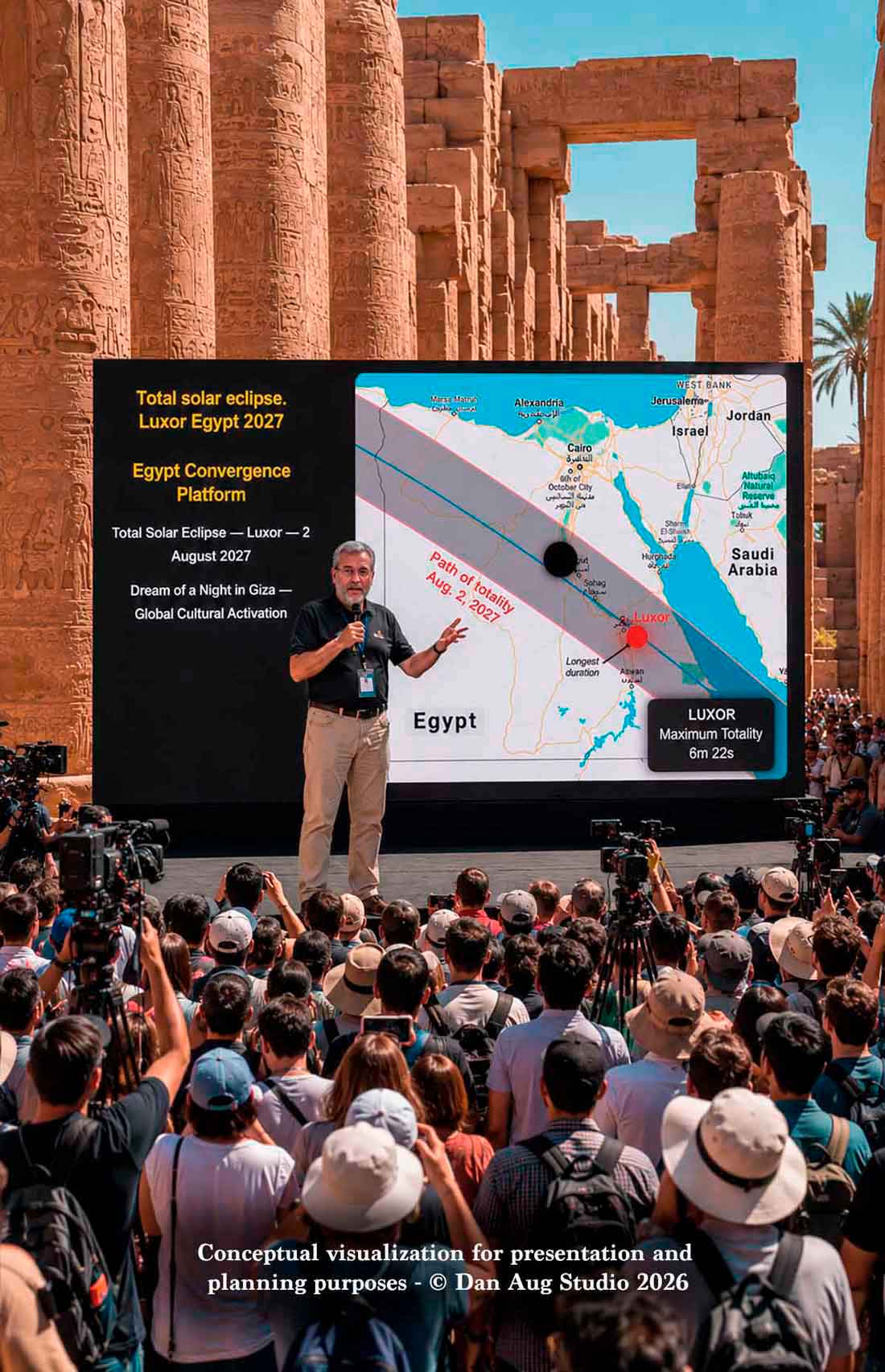 Astronomy
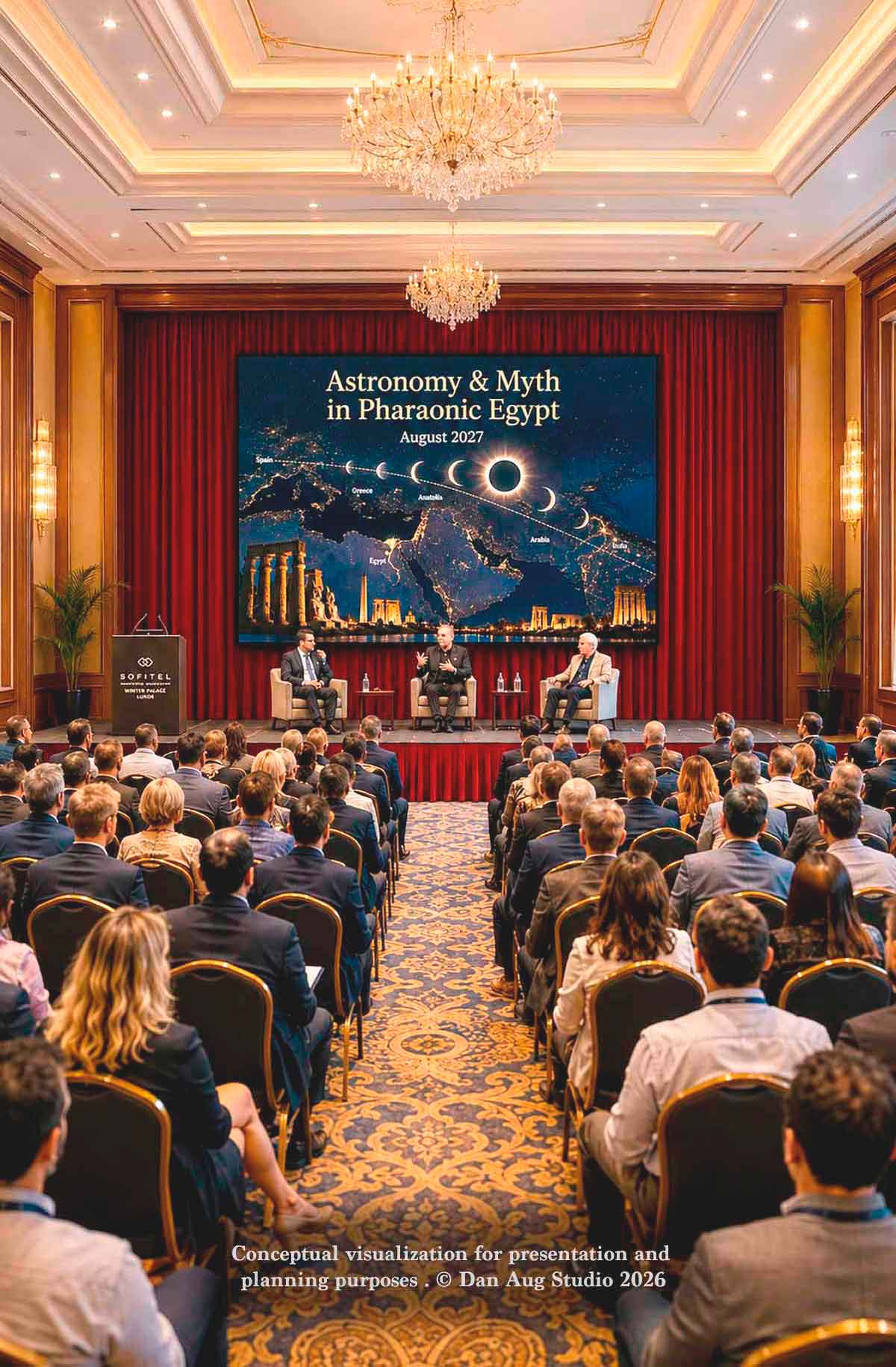 Culture
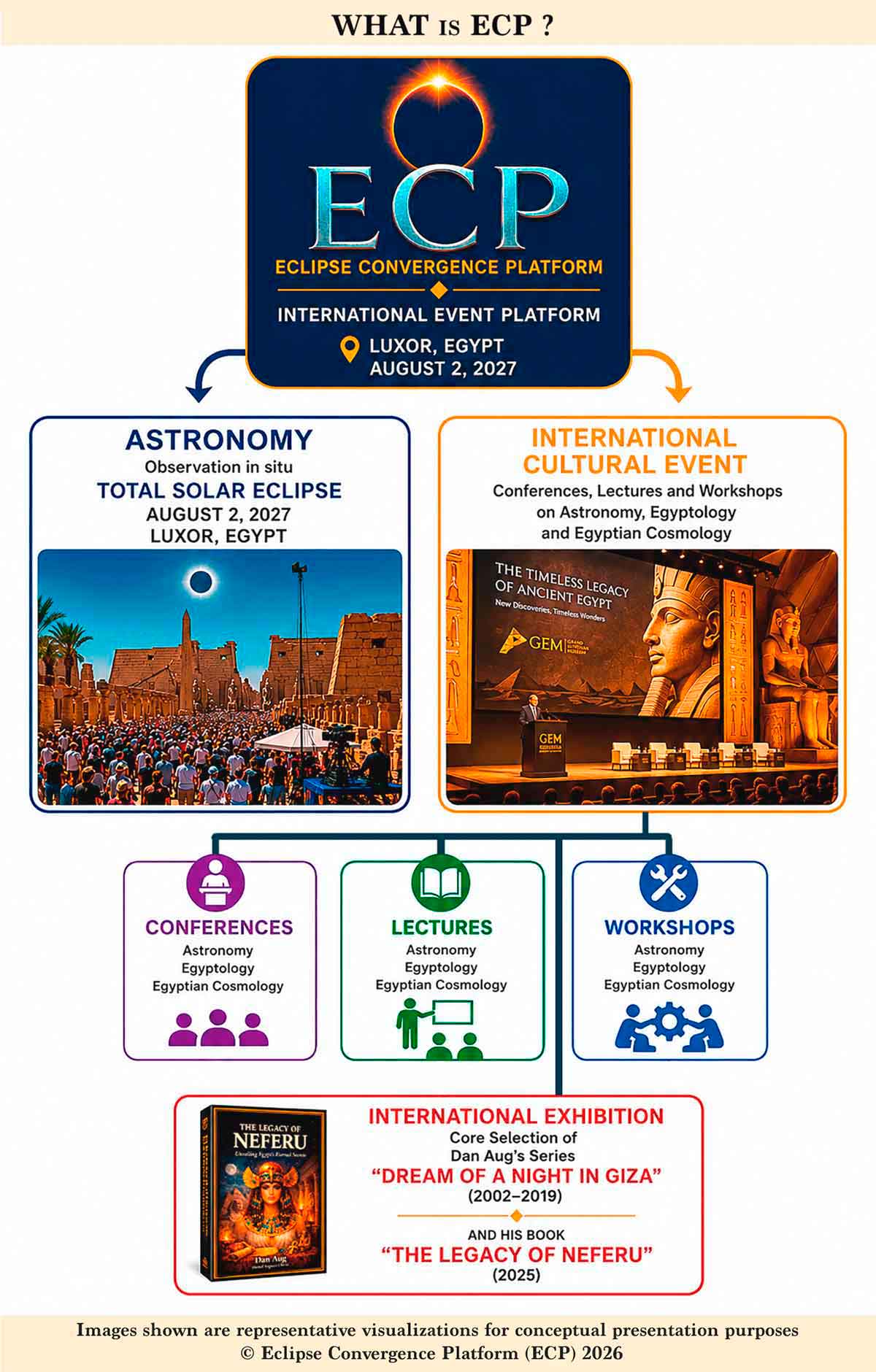 ECP Model